
Anxiety is like a fire alarm that won’t stop ringing—even when there’s no fire. It hijacks your focus, clouds your thinking, and floods your body with tension. But what if the secret to silencing it isn’t outside you, but within you—through mindful breathing for anxiety that can calm your mind in minutes?
Welcome to the world of mindful breathing, a technique that can dial down your anxiety in just minutes. Whether you’re panicking before a presentation, overwhelmed by daily stress, or stuck in spiraling thoughts, mindful breathing offers a proven way to reclaim your calm fast.
You don’t need a guru, a meditation cushion, or even a quiet room. All you need is your breath—and a little guidance. This guide will walk you through what mindful breathing is, why it works so well for anxiety, and step-by-step techniques to master it on your own. Ready to destroy anxiety with something as simple as your next breath?
Introduction
Understanding the Rise of Anxiety in Modern Life
Let’s face it: modern life is a pressure cooker. From constant notifications, overloaded schedules, and economic uncertainty to relationship stress and global events—our nervous systems barely get a break. It’s no wonder anxiety has become one of the most common mental health issues worldwide.
What’s worse is how normalized it’s become. People walk around feeling tense, distracted, irritable, and overwhelmed without realizing they’re living in a near-constant state of low-grade panic. While there are many long-term strategies like therapy, lifestyle changes, and medication, most people are desperately in need of something immediate—a tool that brings fast relief.
The Need for Practical, Fast-Acting Coping Tools
This is where mindful breathing becomes a game-changer. Think about it: your breath is always with you. It doesn’t require you to be in therapy, on medication, or at a retreat in the Himalayas. It’s instant, accessible, and backed by real science. Breathing exercises for anxiety are not a trend—they’re a time-tested method for calming your body and mind.
And here’s the best part: you don’t have to be a mindfulness master to start. Even just one minute of intentional breathing can begin to deactivate your anxiety response. That’s the kind of power we’re working with here—simple, natural, and unbelievably effective.

What Is Mindful Breathing?
The Basics of Mindfulness
Mindfulness, at its core, is about being present. Not stuck in the past, not worrying about the future—but rooted in the now. Sounds simple, right? But in an age of endless distractions and multitasking, staying present is incredibly challenging.
This is where the breath comes in. Your breath is always in the present moment. It’s the anchor that keeps your awareness grounded when your thoughts are pulling you in a thousand directions. Mindful breathing combines the simplicity of breath with the clarity of mindfulness. It’s about paying attention—on purpose—to the act of breathing.
How Breath Anchors Your Awareness
When anxiety hits, your thoughts race, your heart pounds, and your breath becomes shallow and erratic. You’re pulled into a spiral of worst-case scenarios and irrational fears. Mindful breathing interrupts this cycle.
By focusing your attention on your breath—inhaling slowly, exhaling fully—you bring your awareness back to the here and now. You’re no longer lost in your head. Instead, you’re back in your body, grounded in something real. That shift alone can change everything.
The Science Behind Mindful Breathing
There’s a solid body of research showing how mindful breathing impacts the brain and body. Studies using brain scans have shown that even a few minutes of deep, focused breathing can reduce activity in the amygdala (the brain’s fear center) and increase activity in the prefrontal cortex (responsible for rational thinking).
Breathing deeply also signals your parasympathetic nervous system—the “rest and digest” system—to activate. This slows your heart rate, lowers blood pressure, and calms the flood of stress hormones. In essence, breathing becomes your remote control for the nervous system.
Why Mindful Breathing Works for Anxiety
The Nervous System’s Role in Stress
Your body is hardwired to protect you from threats. This is great when you’re facing a lion in the wild—not so much when you’re dealing with traffic, emails, or social anxiety. Your sympathetic nervous system kicks in, triggering the fight-or-flight response. Heart rate spikes. Muscles tense. Breath quickens. Anxiety floods in.
This system was designed for short-term survival—not for the chronic stress of modern life. When it’s constantly activated, it wears you down, leaving you feeling edgy, exhausted, and emotionally fried.
Breathing’s Direct Link to the Vagus Nerve
Here’s where breathing exercises become your superpower. Deep, slow breathing stimulates the vagus nerve—a major player in your parasympathetic nervous system. Think of the vagus nerve as your body’s “calm-down” button. When you activate it, your body shifts from high alert to relaxation.
Even just a few minutes of mindful breathing can send a message through this nerve to your entire body: “We’re safe now. You can relax.” This is why mindful breathing is one of the most effective ways to calm down fast—it changes your physiology.
How Breathing Calms the Fight-or-Flight Response
When you breathe shallowly from your chest—like most people do when anxious—it reinforces the stress response. But when you breathe deeply from your belly, it tells your body that the threat has passed. Your muscles loosen. The heart rate slows. The mind becomes clear.
The transformation is so quick it almost feels magical. But it’s not magic—it’s biology. Mindful breathing doesn’t just distract you from anxiety; it disables the very system that anxiety runs on.
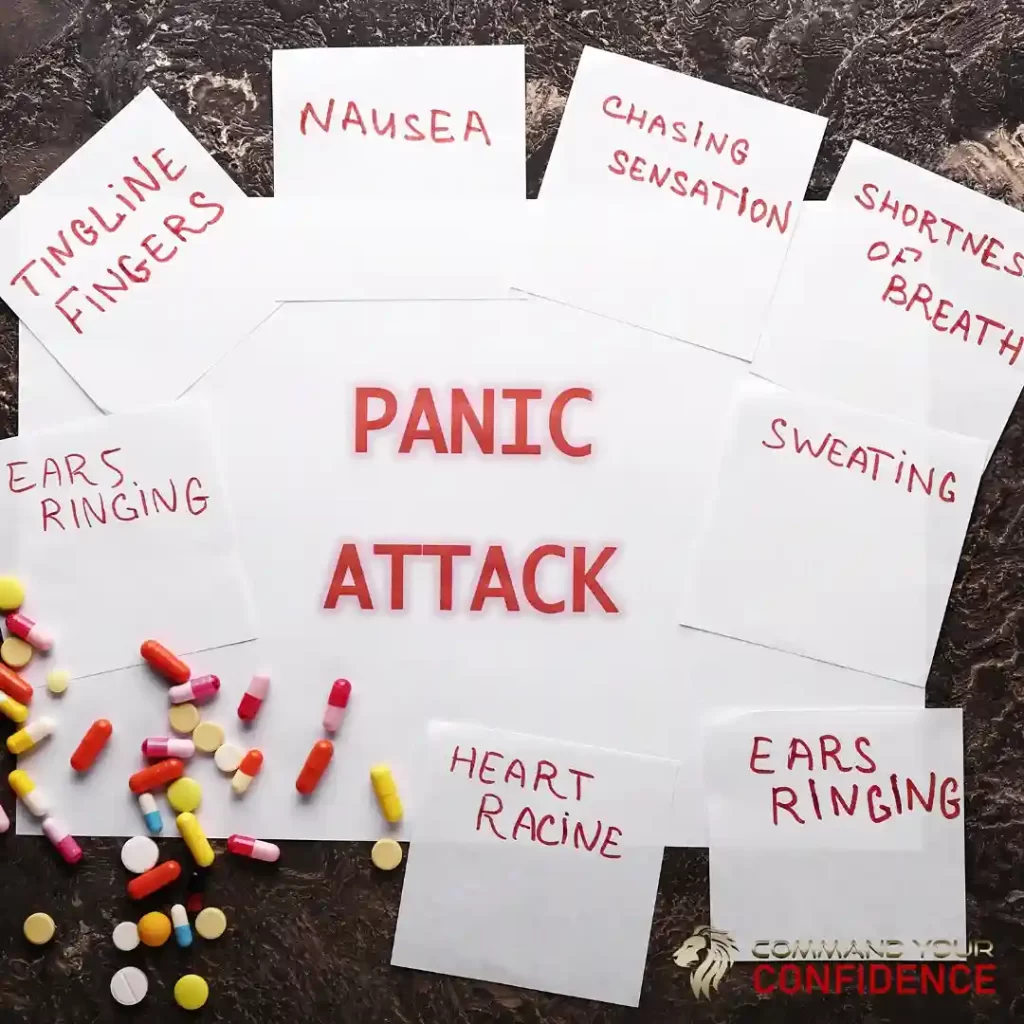
Signs You Need Mindful Breathing Right Now
Recognizing Common Anxiety Symptoms
You might think you’d know when you’re anxious, but anxiety doesn’t always announce itself loudly. It often shows up in subtle, sneaky ways like:
- Feel constant tension in your shoulders or jaw
- Notice racing thoughts or trouble concentrating
- Experience shortness of breath or a tight chest
- Digestive issues or nausea
- Irritability or restlessness
If any of these sound familiar, your body might be screaming for a reset. That reset can start with your breath.
Emotional and Physical Triggers
Everyone has different anxiety triggers—social situations, financial stress, deadlines, health worries, or even seemingly minor things like a change in routine. The key is not to eliminate all stress (that’s impossible), but to recognize your early warning signs.
Catching anxiety early allows you to use mindful breathing before things spiral. Think of it like putting out a spark before it becomes a wildfire.
Early Intervention with Breath Awareness
The earlier you can catch your anxiety and start breathing mindfully, the more effective it is. You can even build breathing breaks into your day proactively. A few deep breaths in the morning, during lunch, and before bed can prevent anxiety from taking hold at all.
Mindful breathing is like brushing your teeth—not just something you do when there’s a problem, but a daily habit that keeps things running smoothly.

Conclusion
If there’s one thing anxiety hates, it’s being ignored. It feeds on tension, overthinking, and panic. But the beautiful part is this: you can take its power away using nothing more than your breath.
Mindful breathing isn’t just a temporary fix—it’s a transformation tool. It reconnects you with your body, your calm, and your clarity in a world that constantly demands your attention. Whether you’re on a packed train, in a heated meeting, or lying awake at night—your breath is there, ready to help you take back control.
It’s not about being perfect or Zen 24/7. It’s about having a fast, powerful way to ground yourself when life starts to spin. Start practicing. Even if it feels weird or uncomfortable at first, keep going. Like any skill, it strengthens with time and repetition.
And if you’re ready to go even deeper? Coaching is available to guide you in mastering stress-proof techniques that support your mental health and performance long term. You’re not alone in this. You’ve got your breath. You’ve got tools. And now, you’ve got a roadmap.
Learn how to use powerful breathing techniques in real life. Coaching available now for stress-proof success.
Frequently Asked Questions (FAQs)
How long does it take for mindful breathing to work on anxiety?
Mindful breathing can start calming your nervous system in as little as 60 to 90 seconds. Many people notice a significant shift within 3 to 5 minutes. The key is consistency—just a few minutes daily can lead to long-term benefits.
Can mindful breathing help during a panic attack?
Absolutely. During a panic attack, your breathing tends to become rapid and shallow. Slowing down your breath and focusing on each inhale and exhale can interrupt the panic loop and help return your body to a state of balance.
What if I can’t focus when I try to breathe mindfully?
That’s normal, especially if you’re new to it. Your mind might wander or resist. The goal isn’t to stop your thoughts but to gently return your focus to your breath each time it drifts. Think of it like training a muscle—the more you practice, the easier it gets.
When is the best time to practice mindful breathing?
Anytime! Many people find it helpful first thing in the morning to set the tone for the day, or right before bed to wind down. It’s also great to use in stressful moments—before a meeting, during an argument, or whenever anxiety hits.
Do I need to sit still to do mindful breathing?
Nope! While sitting quietly is ideal when you’re learning, you can practice mindful breathing while walking, commuting, cooking, or even exercising. The beauty of this technique is its flexibility—you can do it anywhere, anytime.