
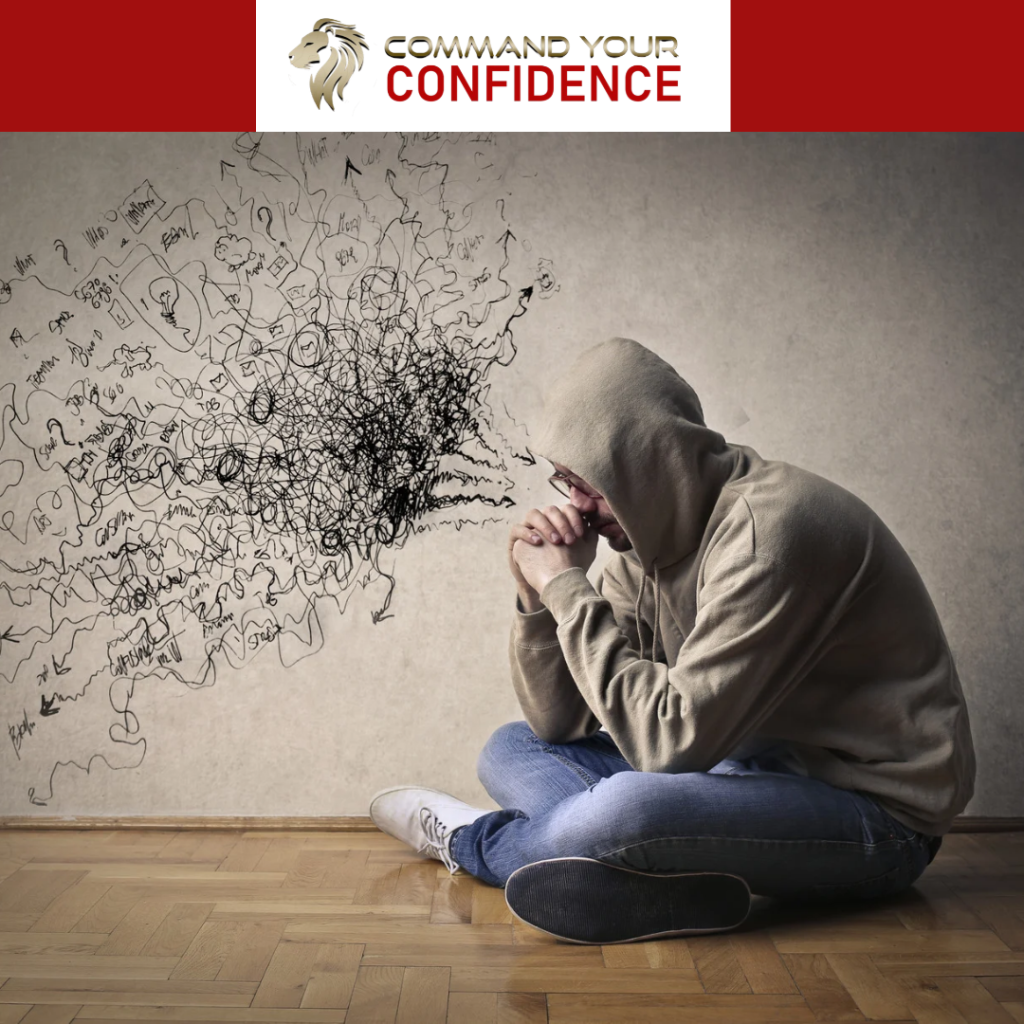
Feeling stuck in life means you know you want more, but you can’t seem to move toward it. It usually comes from a gap between how you live and what you value, mixed with fear of change. The fix is rarely one big decision. It’s a small, honest step, then another one.
I’m Robert Kubaiko, a men’s confidence and life coach with Command Your Confidence. In this guide, I’ll walk you through what being stuck really means, why it happens, and seven ways to move forward. You’ll also get a simple 7-day plan you can start today.
Key takeaways
- Feeling stuck is common and usually temporary. It’s a signal, not a life sentence.
- Most people get stuck for a few reasons: fear of change, living by someone else’s values, comparison, burnout, or no clear goal.
- Action creates motivation, not the other way around. Start with one tiny step.
- Look at where you’re stuck (career, dating, or personal growth). Each needs a different first move.
- If “stuck” comes with hopelessness, numbness, or thoughts of self-harm, talk to a doctor or therapist. Coaching helps you move forward, but it doesn’t replace mental health care.
What does feeling stuck in life mean?
Feeling stuck in life means your days keep moving, but you don’t. You feel trapped in the same routine, the same job, or the same patterns, even though part of you knows you’re capable of more.
When people ask, “What does it mean to feel trapped in your own life?”, the honest answer is usually this: you’ve outgrown something, but you haven’t yet given yourself permission (or a plan) to change it. The feeling is your mind telling you something needs to shift.
Is it normal to feel stuck in life?
Yes. Feeling stuck is a normal part of being human, and it often shows up during transitions: a new decade, a breakup, a job that no longer fits, or simply after a long stretch of doing the same thing.
It’s not a sign that you’re broken or lazy. I know this one personally. For years, low confidence held me back from dating, chasing my goals, and truly living life. That constant pressure turned into anxiety. What changed things for me was mindset work, personal growth, and coaching. Being stuck was where my change started, not where it ended.
Signs you’re stuck in life
Not sure if you’re stuck or just tired? Run through this quick self-check. If three or more sound like you, keep reading.
| Every week feels the same | “Nothing ever changes.” |
| You procrastinate on things that matter | “I’ll start Monday.” (Again.) |
| You doubt yourself even when things go well | “I don’t really deserve this.” |
| You feel like a fraud | “Soon they’ll see through me.” |
| You compare yourself constantly | “Everyone my age is ahead of me.” |
| You have ideas but don’t act on them | “What if it doesn’t work?” |
| You feel restless but don’t know what you want | “I just know it’s not this.” |
If you recognize yourself here, you’re not alone. Self-doubt, feeling like a fraud, and procrastination are all things you can work on.
Why do you feel stuck in life? 6 common reasons
You feel stuck when something inside you wants change, but something else (fear, habit, or doubt) keeps you in place. Here are the most common causes.
1. You’re afraid of change
Change means risk. Even an unhappy routine feels safe because it’s familiar. Your brain prefers the known problem over the unknown solution.
I see fear differently. As I put it on my coaching page: “Fear isn’t your enemy—it’s your signal to rise.” The discomfort you feel when you think about changing is usually a sign you’re pointed in the right direction.
2. You’re living by someone else’s values
Maybe you chose a career, a city, or a lifestyle because it was expected of you. When your daily life doesn’t match what you care about, you’ll feel stuck no matter how “successful” you look on paper.
3. You’re comparing your timeline to everyone else’s
Social media shows you everyone’s highlight reel. When you measure your chapter three against someone else’s chapter twenty, you’ll always feel behind.
4. You’re burned out
When you’re exhausted, every decision feels heavy. Burnout can look like being stuck, but what you actually need first is rest.
5. You don’t have a clear goal
It’s hard to move forward when you don’t know where “forward” is. Vague wishes (“I want a better life”) don’t give you a next step.
6. Your self-talk is holding you back
Thoughts like “I’m not good at change” or “It’s too late for me” feel like facts. They’re not. They’re old stories, and you can rewrite them. (My guide on how to change your mindset goes deeper on this.)
7 ways to move forward when you feel stuck
Here’s the core of this guide. Each step is simple on purpose. You don’t need to do all seven this week. Start with the one that hits hardest.
One thing I disagree with in a lot of “get unstuck” advice: it tries to pump you up. A burst of motivation feels great for a day, then fades. If you want to make real progress, you need more than a boost of motivation. You need self-awareness. That means understanding your patterns, calling out the behaviors holding you back, and learning how to shift them for good. Every step below is built around that.
1. Accept where you are instead of avoiding it
The first step is to stop fighting the feeling. Say it out loud: “I feel stuck right now.” Notice the word right now. You’re describing a moment, not your identity.
Avoidance (scrolling, staying busy, numbing out) keeps you stuck longer. Acceptance gives you a clear starting point.
2. Get clear on your core values
Write down the five things that matter most to you: honesty, freedom, family, growth, health, adventure, whatever is true for you. Then ask: “Does my daily life reflect these?”
Goals are things you achieve. Values are how you want to live. When your goals feel blurry, your values tell you which direction to face.
3. Take one tiny step today
Don’t wait to feel motivated. Action creates motivation, not the other way around. Pick something you can finish in 10 minutes: send one email, update one line of your résumé, clean one corner of your room, take a walk.
Small wins build proof that you can move. That proof is where confidence comes from. I talk about this in my short video on how taking action builds confidence: confidence doesn’t come from waiting until you feel ready. It comes from doing the things that challenge you. Every time you act, you prove to yourself that you can handle uncomfortable situations.
This isn’t just a coaching slogan. Psychologists use a related approach called behavioral activation, where people schedule small, meaningful activities instead of waiting to feel motivated. A 2020 Cochrane review of behavioral activation found it’s a promising treatment for depression, although the authors note the evidence has limits. (More on this in Believing in Yourself Is the First Secret to Success.)
4. Challenge the “I’ll never change” story
When a thought like “I always mess this up” shows up, treat it like a claim in court. What’s the evidence against it? When did you handle something hard? When did you learn something new?
You’re not trying to fake positivity. You’re training your mind to see the full picture, not just the worst parts.
5. Stop comparing your progress
Comparison steals energy you could use to move. Look at what you can realistically handle in this season of your life, not what someone else is posting.
Research backs this up. A 2014 study in Psychology of Popular Media Culture found that people who used Facebook more often had lower self-esteem, and that the link ran through more “upward” comparisons, which means measuring yourself against people who seem to be doing better.
A useful swap: instead of “Where should I be by now?”, ask “What’s one thing I can improve by next month?”
6. Break old patterns and change your environment
Look at your habits, routines, and even the people around you. What has stopped serving you? You might have outgrown a job, a habit, or a mindset without noticing.
Change something physical: your morning routine, your workspace, the route you take, where you spend your Friday nights. New inputs lead to new thinking. One change I recommend for building social confidence: take an improv class. It trains you to think on your feet, and it gets you around new people every week. Pair it with being social with everyone you meet (the barista, a coworker, a neighbor), not just people you want to impress. I share both ideas in 3 steps to improve your social skills. For more, see small ways to be more outgoing and social.
7. Ask for support
Isolation makes feeling stuck worse. Talk to someone you trust: a close friend, a family member, a mentor, or a coach.
It’s tempting to figure everything out alone. I’ve learned that every major shift I’ve made came from the guidance of a coach, mentor, or teacher. Getting help isn’t weakness. It’s a shortcut.
Where are you stuck? Career, dating, or personal growth
Feeling stuck usually lives in one area of life first. Find yours, then use the matching first move.
| Career or business | Bored at work, no growth, afraid to switch paths or start something | Write down what you’d do if fear weren’t a factor, then take one 10-minute step toward it. Read how to achieve your goals. |
| Dating and relationships | Single for too long, stuck in a relationship that isn’t growing, nervous around women | Work on self-worth first, then on one real-world social action a week |
| Personal growth and mindset | Restless, unmotivated, “going through the motions” | Values exercise + one new daily habit for seven days |
| Your age (25, 30, 40+) | “I should be further along by now” | Drop the timeline. Set one goal for the next 90 days instead |
Stuck in your career
Career stuckness often comes from fear of judgment or from building a life around someone else’s expectations. Start by naming what you don’t want anymore. Clarity often starts with a “no.” If you run your own business and feel stuck, business coaching focuses on mindset, decision-making, and strategy together.
Stuck in dating or a relationship
In dating, feeling stuck usually traces back to confidence: fear of rejection, overthinking, or not feeling “enough.” The answer isn’t pickup lines or a fake persona. It’s becoming a grounded man who leads with clarity. That’s the focus of my men’s dating coaching, and of the guide on how to be a man who is confident.
My advice if you feel stuck in dating: stop trying to impress, and build a life you genuinely enjoy. Pursue your goals. Take care of yourself. Spend time with friends. Develop hobbies and experiences that make you excited about your own life. When you’re proud of the life you’re building, you have more to bring into a relationship and less pressure to impress anyone.
Feeling stuck at 30, 40, or beyond
Milestone ages invite comparison: “By 30 I should have…” Those timelines are made up. What matters is direction, not speed. Pick one area, set one 90-day goal, and judge yourself only on progress.
A 7-day plan to get unstuck
Reading helps, but doing changes things. Here’s a simple week built from the seven steps above. Each day takes 10–20 minutes.
| 1 | Write down what you feel stuck about, without filtering | Naming it shrinks it |
| 2 | List your top 5 values. Circle the one you’re ignoring most | Shows the gap |
| 3 | Do one 10-minute task you’ve been avoiding | Action creates motivation |
| 4 | Write one limiting thought + three pieces of evidence against it | Rewrites the old story |
| 5 | Mute or unfollow three accounts that make you compare | Protects your focus |
| 6 | Change one routine (morning, workspace, or weekend plan) | New inputs, new thinking |
| 7 | Tell one person what you’re working on, or book a call with a coach | Support and accountability |
Want to keep the momentum going? A short daily gratitude habit helps you notice progress. Here’s how to practice gratitude and feel more fulfilled.
Stuck, or something more? Coach vs. therapist
Feeling stuck is different from depression, but the two can overlap. If being stuck comes with lasting sadness, loss of interest in things you used to enjoy, sleep or appetite changes, or hopelessness for two weeks or more, please talk to a doctor or licensed therapist. The National Institute of Mental Health explains the signs of depression.
If you’re in crisis or thinking about harming yourself, call or text 988 in the US to reach the 988 Suicide & Crisis Lifeline.
Here’s a simple way to think about which kind of help fits:
| You’re dealing with depression, anxiety disorders, or trauma | You’re mentally well but stuck in self-doubt, procrastination, or hesitation |
| You need diagnosis or treatment | You want clarity, a plan, and accountability |
| Your past is heavily affecting your present | You’re ready to focus on what you do next |
I’m a coach, not a therapist. Coaching can work alongside therapy, but it doesn’t replace it.

Frequently asked questions
Why do I feel so stuck in life?
You usually feel stuck because something you want (growth, change, meaning) is blocked by fear, habit, or self-doubt. Common causes are fear of change, living by others’ expectations, comparison, burnout, and having no clear goal.
How do you cope when you feel stuck in life?
Start by accepting the feeling instead of fighting it. Then take one small action, like a walk, a phone call, or a 10-minute task, and talk to someone you trust. Small steps rebuild momentum faster than big plans.
What should I do if I feel stuck in life and don’t know what to do?
Don’t try to solve your whole life at once. Write down your top values, pick the area that feels most stuck (career, dating, or personal growth), and choose one action you can finish today. Clarity grows from action.
What does it mean to feel trapped in your own life?
Feeling trapped usually means you’ve outgrown your current situation but don’t yet see a way out. It’s a signal that something needs to change, not proof that you’re out of options.
Is it normal to feel stuck in life at 30 or 40?
Yes. Milestone ages make people compare themselves to timelines that don’t really exist. Many people feel stuck during these transitions. Focus on direction and progress over the next 90 days, not on where you “should” be.
How can I help someone who feels stuck in life?
Listen without rushing to fix it, ask what they’d do if fear weren’t a factor, and encourage one small next step. If they seem hopeless or withdrawn for weeks, gently encourage them to talk to a doctor or therapist.
Can a life coach help if I feel stuck?
Yes, if you’re mentally well and stuck in self-doubt, procrastination, or unclear goals. A coach helps you get clear, build a plan, and stay accountable. If depression or anxiety is involved, start with a licensed therapist.
You don’t have to stay stuck.
Feeling stuck in life isn’t the end of your story. It’s the moment you realize you’re ready for the next chapter. Accept where you are, reconnect with your values, and take one small step today.
If you want help turning that step into real momentum, that’s what I do. At Command Your Confidence, I coach men one-on-one over Zoom to break through self-doubt, build an unshakable mindset, and move forward with purpose. You can learn more about my one-on-one coaching, confidence coaching, or mindfulness life coaching if you feel busy but stuck.
Ready to move forward? Book your FREE 20-minute session and let’s figure out your next step together.